 The Housing Market Is Turning a Corner Heading Into 2026
After several years of elevated mortgage rates and cautious buyers, the housing market is beginning to show meaningful signs of life. Activity isn’t surging overnight—but momentum is quietly building. Sellers are re-entering the market, buyers are becoming more confident, and conditions are slowly shifting toward a healthier balance.
As we look ahead to 2026, three key trends are shaping what comes next.
Mortgage Rates Are Trending Down
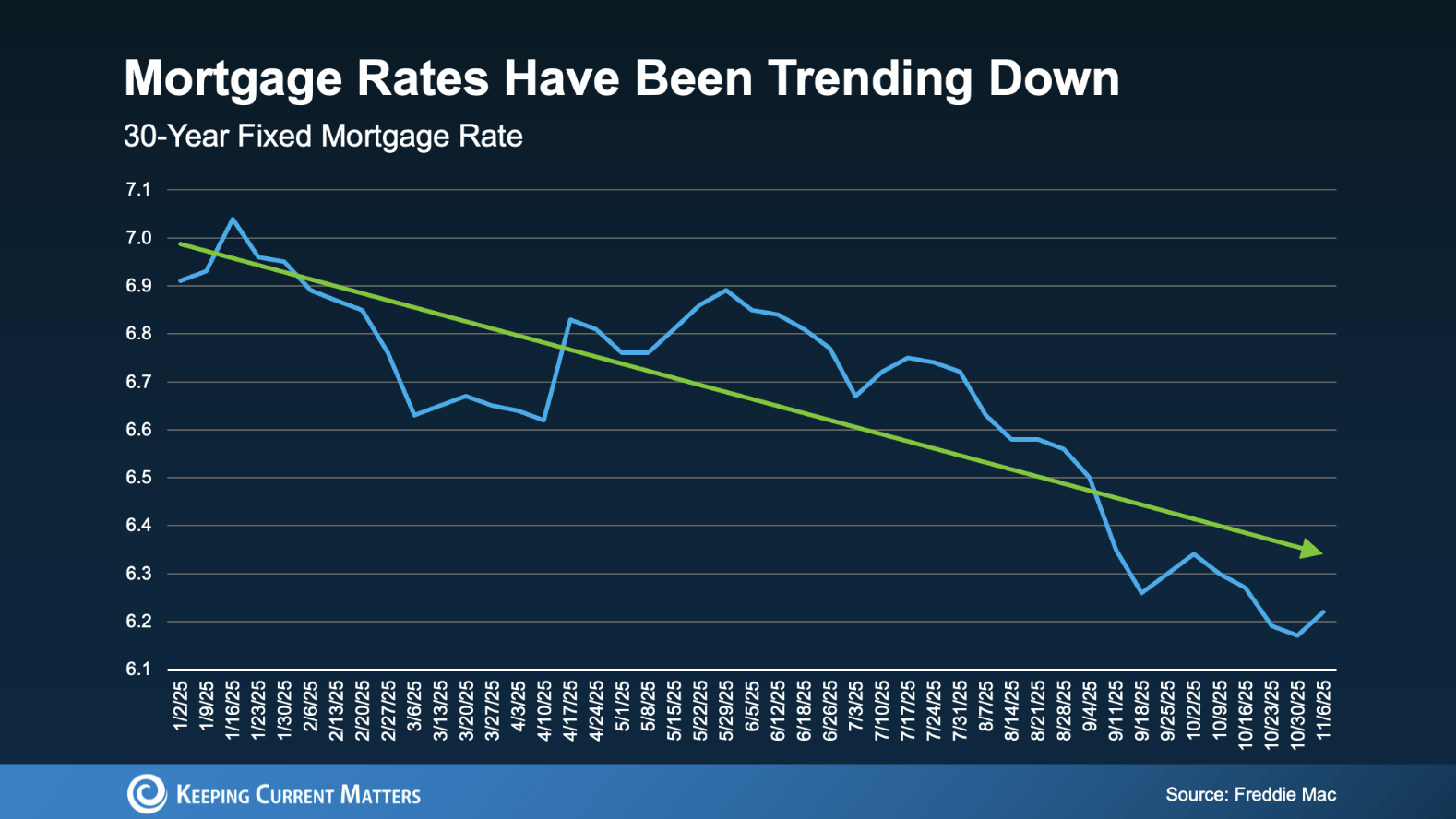
Mortgage rates will always fluctuate, especially in times of broader economic uncertainty. But when you zoom out, the overall trend matters more than short-term volatility—and that trend has been moving in the right direction.
Over the past several months, rates have eased to some of the most favorable levels seen in 2025. According to Freddie Mac, even small rate improvements can make a meaningful difference for buyers. Their Chief Economist recently noted that on a median-priced home, lower rates could save buyers thousands of dollars annually compared to earlier this year.
What does that mean in practical terms? Buying power is improving. Data from Redfin shows that a buyer with a $3,000 monthly budget can now afford roughly $25,000 more home than they could a year ago. That shift alone is helping bring buyers back into the market.
More Homeowners Are Ready to Sell
For years, many homeowners felt “locked in” by historically low mortgage rates and chose to stay put. That lock-in effect kept inventory tight and competition high. Now, as rates soften and life changes take priority, more homeowners are deciding it’s time to move.
According to Realtor.com, the number of homes for sale has grown steadily and is approaching levels not seen in nearly six years. That’s an important development. More inventory gives buyers options—and helps the market move closer to balance after years of extreme conditions.
Buyers Are Re-Engaging
As affordability improves and inventory grows, buyers are responding. The Mortgage Bankers Association reports that purchase mortgage applications are up compared to last year, signaling renewed demand.
Looking ahead, economists from Fannie Mae, the Mortgage Bankers Association, and the National Association of Realtors are all forecasting moderate growth in home sales going into 2026. This isn’t a rapid rebound—but it is steady progress.
What This Means for Fort Worth
National trends matter, but real estate is always local. Here in Fort Worth, growing inventory, easing rates, and renewed buyer interest are creating opportunities for both buyers and sellers who stay informed and act strategically.
The market doesn’t need a dramatic swing to create opportunity. Often, the best results come when momentum is quietly building—before competition heats up again.
Bottom Line
After several slower-than-normal years, the housing market is finally turning a corner. Declining mortgage rates, more listings, and increasing buyer activity all point toward a more active and balanced market heading into 2026.
Whether you’re considering buying, selling, or simply watching the market, understanding these shifts is key. A knowledgeable local real estate professional can help you navigate what’s changing—and make the most of what’s ahead.
If you’d like help tailoring this to a specific Fort Worth neighborhood, price point, or buyer/seller audience, I can do that next.