 It’s Getting More Affordable to Buy a Home — And That Matters More Than You Think
For the first time in a while, I have some genuinely encouraging news for buyers.
Buying a home is getting more affordable.
Now, I want to be clear — this doesn’t mean homes are suddenly “cheap” or that every buyer is instantly in a position to jump in. But after several years of rising rates, fast price growth, and tight budgets, the pressure is finally starting to ease. And that shift matters.
Affordability Is Moving in the Right Direction
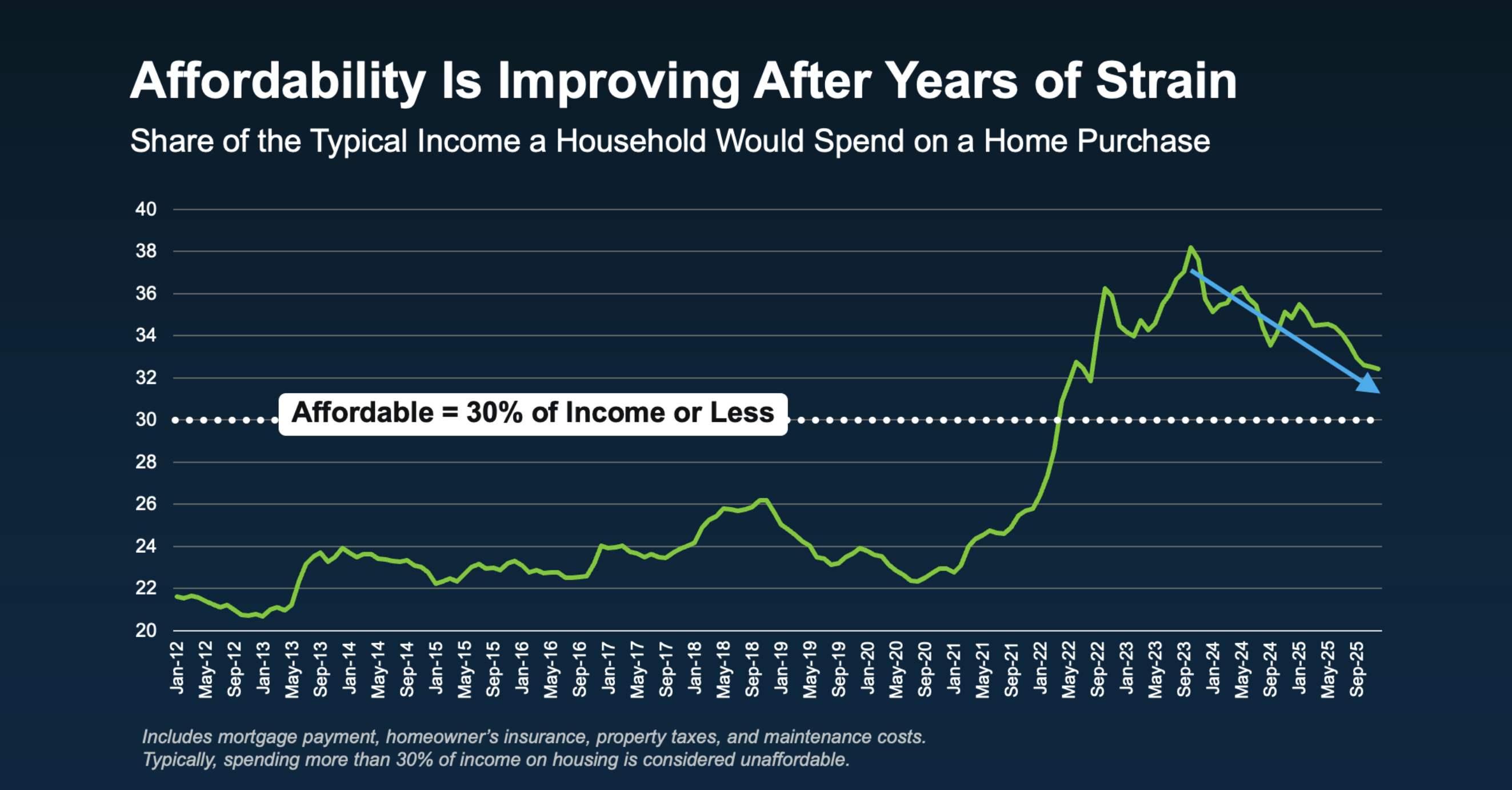
One of the best ways to measure affordability is by looking at how much of a household’s income it takes to own a home.
According to Zillow, housing is generally considered affordable when total housing costs — mortgage, taxes, insurance, and basic maintenance — take up about 30% or less of monthly income.
Over the last few years, we were well above that mark. For many buyers, the math simply didn’t work.
But now? That’s starting to change.
Recent data shows that the share of income needed to buy a home has come down compared to recent years. We’re not fully back to that 30% benchmark yet, but we are finally moving closer — and that’s a meaningful shift.
Why Buying Is Starting to Feel More Possible
There isn’t just one reason affordability is improving — it’s a combination of factors finally working together.
-
Mortgage rates have eased.
Rates are sitting near their lowest levels in more than three years. Even small drops in rates can have a noticeable impact on monthly payments, especially for buyers who felt priced out when rates were closer to 7%.
-
Home price growth has cooled.
Prices aren’t crashing — and that’s a good thing. But they’re no longer rising at the breakneck pace we saw a few years ago. Slower price growth means buyers aren’t constantly chasing a moving target.
-
Wages are growing faster than home prices.
This one is huge. When incomes rise faster than home values, buying power improves — even if rates don’t drop dramatically. That’s exactly what we’re seeing now.
The forces that made buying so difficult over the past few years are finally easing, and while affordability won’t snap back overnight, the trend is clearly heading in the right direction.
What This Means Locally
Affordability isn’t improving at the same pace everywhere. Some markets are expected to fall back under that 30% affordability threshold sooner than others, and some areas are already seeing meaningful relief.
That’s why understanding what’s happening locally matters so much.
National headlines only tell part of the story. What really matters is how these shifts show up in Fort Worth and the surrounding areas — and that’s where having a local expert makes the difference.
The Bottom Line
For the first time in a long time, affordability is improving — and that’s not something to overlook.
If buying didn’t make sense for you a year ago, it may be worth taking another look now. You don’t have to make a decision today, but getting clarity on your numbers and your options could put you in a much better position moving forward.
If you want to talk through what this means for you — your budget, your timeline, or your goals — I’m always happy to help.
— Joshua Mills
Mills Real Estate Group | Fort Worth